
Fort Bend County Criminal Docket Searches
Every Fort Bend County criminal docket search runs through the official Fort Bend Odyssey Public Access portal. The portal sorts records by court and record family. Pick the criminal area that fits the case. Felonies sit with a District Court and the District Clerk. Class A and B misdemeanors include DWI, theft, assault, or a covered drug charge. Those sit with a County Court at Law and the County Clerk. Class C appeals can come from a justice or municipal court. Those can land in that county-level file too. A case number is the best starting point when you have one. Without it, a full defendant name, attorney, citation, or filing-date range will narrow things down. Each search choice matters, since broad name results can pull in people with similar names. Soundex and the asterisk wildcard widen a match. Treat those tools as aids, not as proof of identity.
- Open Odyssey and choose the relevant criminal search area.
- Select Case, Defendant, Citation, Attorney, or Date Filed.
- Enter the best known value and review the court and filing date.
- Open the blue case number and inspect the Register of Actions.
- Ask the proper clerk for an eligible copy when the image is absent.
Fort Bend Criminal Clerk Split
Fort Bend County splits its criminal docket between two clerks. The Fort Bend County District Clerk keeps the felony files for the District Courts. Misdemeanors belong to the County Clerk and the County Courts at Law. Two offices, two sets of forms, two copy paths. Both offices use the county's Odyssey system. A misdemeanor case file does not become a District Clerk record just because of that. Route each docket request to the clerk who actually holds the file.
When the online search is not enough, try a paid name search. The District Clerk offers one by form. One form covers felony records from 1982 forward, and an earlier range can be requested. The fee is $5 per name. The County Clerk puts its online misdemeanor coverage from 1983 forward. Unfiled misdemeanor records start October 2, 2017. In person or by mail, give the right clerk the details. List the cause number, the defendant name, the record type, and a date range that helps. A phone call can sort out procedure. The District Clerk will not take a copy request by phone alone.
Criminal Dockets: What They Show
Every Fort Bend County criminal court docket has a Register of Actions at its heart. That is a dated list of case events. The list can show a charge was filed. It can show counsel appeared, a motion was entered, or a hearing was set. A title in that list does not guarantee the linked image is public, though. The clerk may redact an image, restrict it, or keep it offline. The event stays indexed all the same.
| Case number | The local cause identifier, shown here only as court-issued cause number. |
|---|---|
| Charge | The filed offense category and related case detail, when public. |
| Parties and counsel | Defendant and attorneys of record. |
| Settings | First appearance, pretrial, motion, plea, or trial entries. |
| Actions | Filings, orders, notices, and linked public documents. |
| Disposition | A plea, conviction, dismissal, sentence, or other recorded result. |
Read the court, the status, and the entry date side by side. A setting is just a scheduled event, not the outcome of the case. Keep in mind that the latest docket entry may reset or remove an earlier date.
Fort Bend Criminal Search Fields
Odyssey's official help lists five ways to reach a Fort Bend County criminal docket. The field you pick changes both the query and the odds of a false match. Case number is the most exact route. Defendant and attorney searches lean on names, which invites mix-ups. Citation can tie a ticket identifier to a filed misdemeanor matter. Date Filed narrows by one date only. It uses the date the clerk opened the case, not any hearing date.
| Search control | Best use | Check in result |
|---|---|---|
| Case | Known cause number | Court and case style |
| Defendant | Known party name | Filing date and court |
| Citation | Ticket linked to a filed case | Cause number |
| Attorney | Counsel-linked matters | Attorney of record |
| Date Filed | Known filing period | Status and case type |
A red “W” beside a result flags an active warrant under the official Odyssey FAQ. Take it seriously and confirm with the court. A color marker alone is not a full statement of legal status.
Criminal Case Stages on the Docket
Fort Bend County criminal court dockets record a sequence. No two cases move at the same pace. A filing or indictment opens the court record. First appearance covers the early court stage. Pretrial entries may involve counsel, discovery, motions, bond issues, or case management. From there, a plea or trial can resolve the charged matter. A later disposition entry states the recorded outcome. Even after that, post-judgment motions, appeals, or writ activity may add more entries. The docket can keep growing.
Docket flow: Filing › First Appearance › Pretrial › Plea or Trial › Disposition › Sentencing
A reset only moves a setting. It is not a dismissal. Likewise, a motion-to-revoke setting describes a court event rather than a final ruling. When the wording is unclear, check the current Register of Actions and ask the assigned court or coordinator to confirm the live setting.
Fort Bend Criminal Docket Rhythm
The 240th District Court page shows how one court publishes its criminal work. First appearances come on Monday at 1:00 p.m. Criminal dockets run Thursday at 10:00 a.m. and 2:00 p.m. That schedule is a local example only, not a promise for every District Court. Justice Court Precinct 1 Place 1 separately posts criminal pretrials and judge or jury trials. Each assigned court controls its own dates. The official 240th District Court page also lays out the calendar and courtroom context used for that docket.
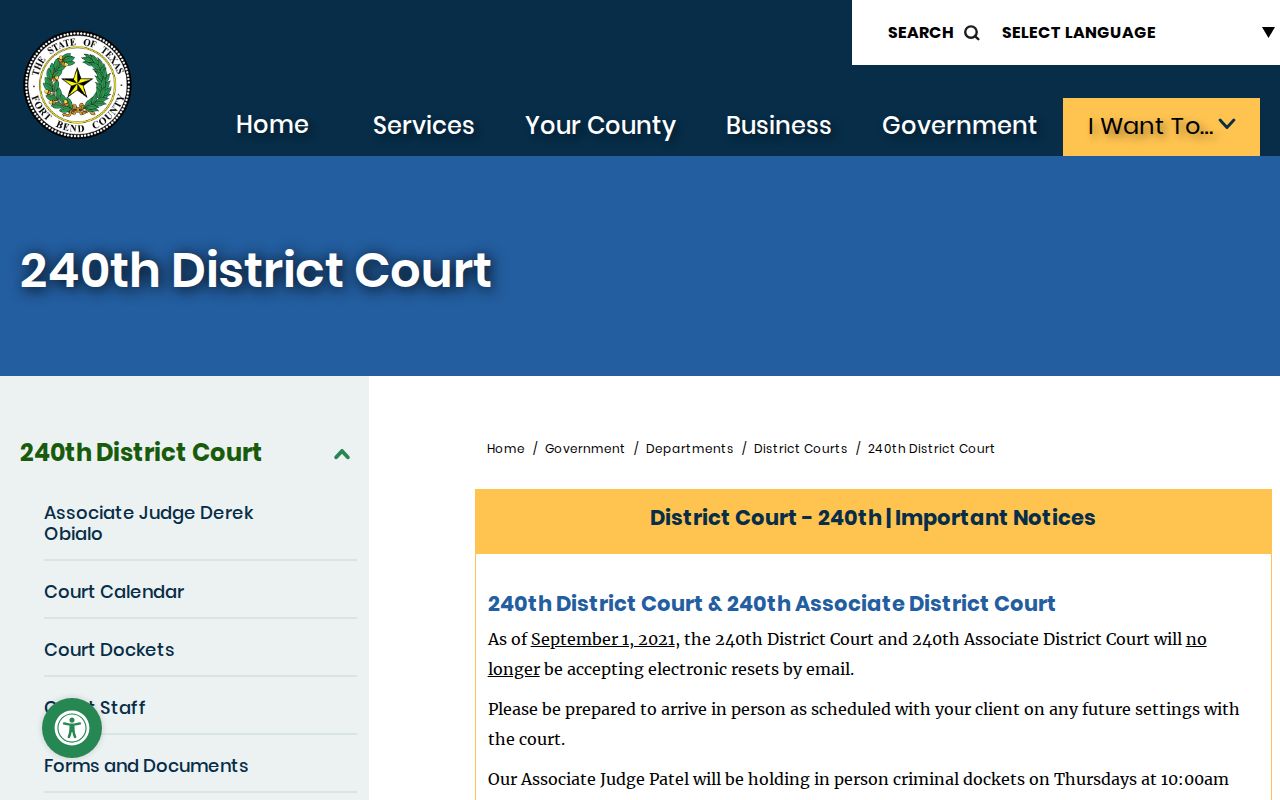
A setting label on the posted docket rhythm tells you little on its own. For a real court date, the case docket or the court coordinator will always beat the pattern. Email reset requests get turned away there, apart from the listed exceptions.
Fort Bend County Criminal Docket Courts
Fort Bend splits its criminal work across several court levels. Felonies go to the District Courts, and the District Clerk keeps those files. Class A and B misdemeanors land in the County Courts at Law, with the County Clerk holding the paper. Justice of the Peace courts, by precinct and place, handle lower-level criminal matters and traffic cases inside their own precincts. City ordinance cases and Class C filings belong to the municipal courts. An appeal opens a fresh file upstairs, carrying a new cause number and its own set of entries.
The official Fort Bend District Courts directory shows all ten District Courts, each with courtroom details and contact information.
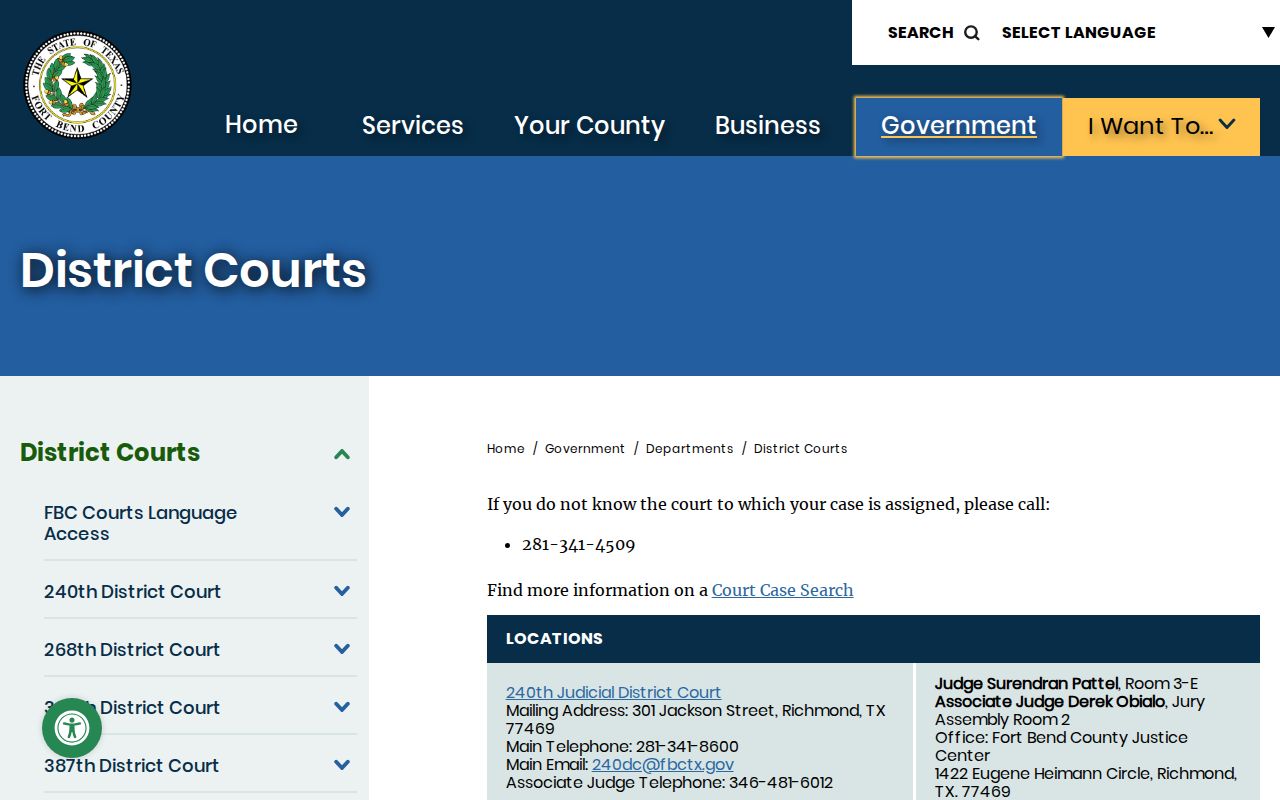
That directory is a routing tool. It sends a felony setting or status question straight to the assigned court. That beats a general office line. Know the filing court before you search anything.
A city citation may never show up as a county misdemeanor unless it gets filed or appealed into that system. Statewide results carry gaps too. re:SearchTX covers the state electronically, yet its own report excludes criminal files from the broad public document set. For a Fort Bend felony or misdemeanor docket, local Odyssey plus the right clerk remains the dependable path.
Fort Bend Criminal Document Access
Finding the case in Odyssey is only the index step. The Register of Actions may link a public PDF or TIFF. Certified copies travel a different route. Eligible ones come through the District Clerk's E-Certify service. Public users there can reach unsealed, non-confidential, redacted documents. Missing district image? A non-party files the written Copy Request Form instead. Parties and attorneys can call District Clerk Customer Service at 281-341-4515. They can also write distclerk@fbctx.gov for the route that fits their role.
Misdemeanor copies from a County Court at Law run through the County Clerk's own misdemeanor form. It wants the cause number, the defendant, the document type, delivery details, and your choice of paper or electronic certification. Service happens at the counters, by mail, or through supported electronic delivery. A phone call can explain the steps. Certified-copy payments even have an official phone option. The request itself still needs every detail the clerk requires.
Access Rules for Criminal Dockets
Public access in Fort Bend County has limits. Juvenile, sealed, expunged, non-disclosed, and other restricted material can be withheld from any public result. Sensitive data may arrive redacted. An index entry proves a document exists even when the image stays locked. So before concluding anything, tell the difference. One record simply has not been imaged. Another is restricted or sealed.
Key rules:
Texas Rule of Judicial Administration 12 governs access to judicial records and its exceptions.
Texas criminal e-filing rules require controls for sensitive data and restricted filings.
Texas Family Code Chapter 58 protects juvenile records through statutory confidentiality rules.
One more distinction matters here. The Texas Public Information Act covers county administrative records, but it cannot replace the clerk's judicial-record process for a criminal case file. Go through the court custodian and the rules governing the actual file.
Verify Fort Bend Criminal Status
Portal data lags. A filed item can sit without a public image for a while. Save the official landing address and note when the search was run. Then compare the newest setting against the newest action. Odyssey down for maintenance? Take the clerk route rather than assuming no record exists. The District Clerk has several fallbacks. The office page, directory, written form, email channel, phone support, and counter each cover a different piece.
A public criminal search answers one narrow question: what the official court index shows right now. A name match is not an identity finding. It should never fuel claims about a person. Confirm any setting or red warrant marker with the assigned court. Request a certified record only when formal proof of an eligible public document is truly needed. The broader Fort Bend County docket search lays out more. Name and case-number paths differ across court families.