
Fort Bend County Civil Docket Searches
The Fort Bend Odyssey portal is where most people start. County Clerk instructions point users to Civil, Family Case Records and allow a search by Case Number, Party Name, Attorney, or Date Filed. The split in duties matters here. The District Clerk holds district civil and family matters, while the County Clerk keeps County Court at Law civil cases. Search only one office and you may miss a valid case sitting with the other.
A cause number is the best tool. If you search by name instead, check the case style, court, filing date, and party role before trusting any result. Soundex matching pulls in names that sound alike, and an asterisk can widen a word under the portal's wildcard rules.
- Identify the likely court level and clerk.
- Choose the matching civil or family search area.
- Search by cause number, party, attorney, or filing date.
- Open the blue case number and read the Register of Actions.
- Request the exact public document from the proper clerk if needed.
Two Fort Bend Civil Custodians
Two clerks split the civil docket in Fort Bend County. The District Clerk serves the District Courts, which include district civil and family cases. The County Clerk serves the County Courts at Law. Its current page describes civil and family coverage as matters under $325,000. Condemnation and workers-compensation cases are included, from 1983 forward. Treat that dollar figure as dated context rather than a ruling on any case's legal jurisdiction. Older county material listed a different amount. So check the current office page when the number affects where you file.
Justice Court civil and eviction cases stay in their precinct unless an appeal opens a County Court file. That appeal can carry its own cause number, parties, settings, and filings. Record both numbers. If a district case climbs higher, the intermediate Texas Court of Appeals keeps a separate appellate docket.
Civil Dockets: What They Show
A search hit in a Fort Bend County civil docket leads from the case header to the Register of Actions. That register is the bridge between the hit and the filed record. Entries appear in time order, naming petitions, answers, motions, notices, hearings, orders, and judgments. But a title alone promises nothing. Whether an image is public depends on the document's status and the governing rule.
| Cause number | The court's identifier, represented as official civil cause number. |
|---|---|
| Case style | The caption naming the parties. |
| Party roles | Plaintiff, defendant, petitioner, respondent, or another role. |
| Register of Actions | Dated filings, orders, notices, and settings. |
| Hearing setting | Date, time, court, officer, and setting type when listed. |
| Disposition | Judgment, dismissal, order, or other case result. |
Case-detail screens sometimes show Financial information. Not every field there is public, though, or fit to republish. Property records are separate from a civil court docket entirely.
Fort Bend Civil Search Controls
Each portal field serves a different job. Case Number works best for a known file. Party Name pulls plaintiffs, defendants, and other civil roles. Attorney ties results to counsel, and Date Filed narrows things when you know the opening period. Always check a result against the court and case type, since one similar name can surface in several record families.
| Field | Use it when | Verify |
|---|---|---|
| Case Number | The cause number is known | Court and caption |
| Party Name | A civil party is known | Role and filing date |
| Attorney | Counsel is known | Attorney of record |
| Date Filed | The filing period is known | Case type and status |
The official County Clerk online-record page lays out the civil, family, misdemeanor, and probate entry points.
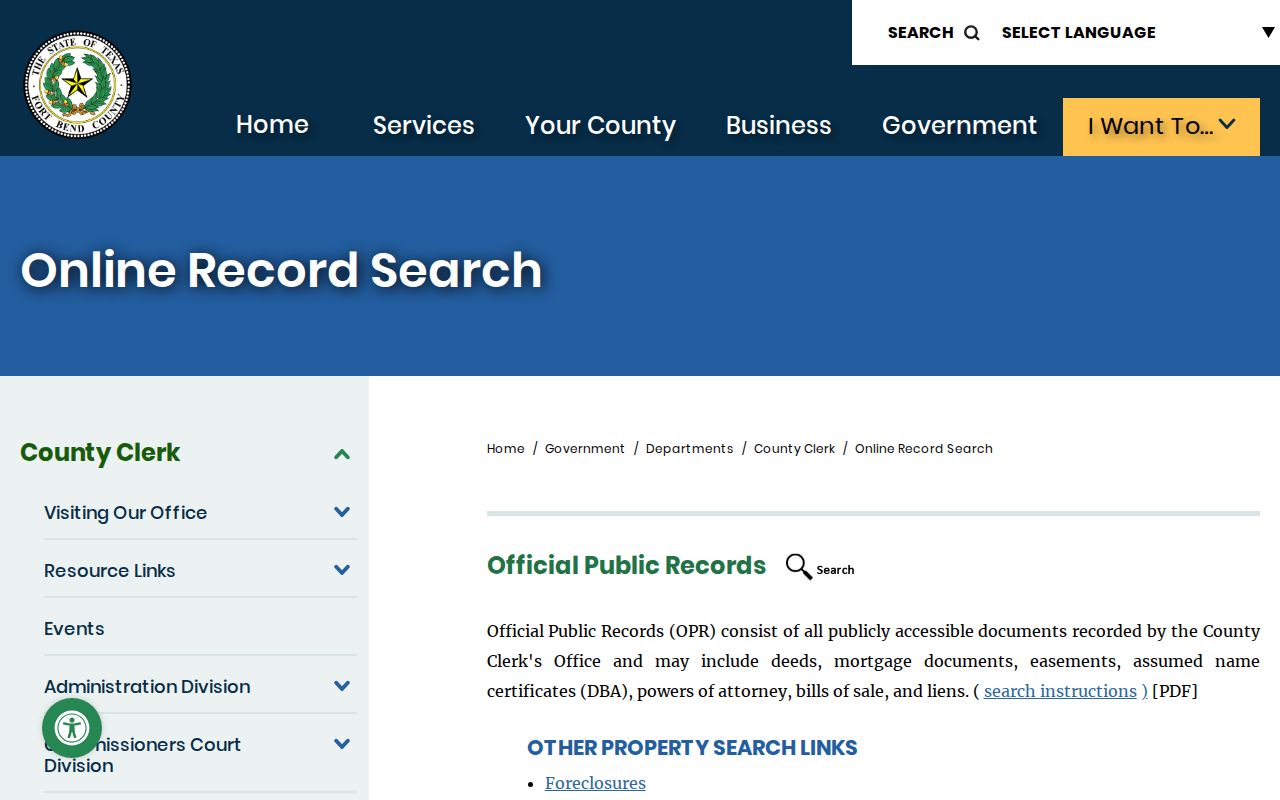
With those choices grouped together, pick your court family before starting a Fort Bend County civil docket search.
What Cases Fill the Civil Docket
Civil dockets in Fort Bend County cross several court levels. District civil files carry higher-level civil disputes. District family files cover divorce, custody, and related matters. County Court coverage follows the categories on the current County Clerk page. Condemnation and workers-compensation cases are listed there too. Justice Courts, meanwhile, keep their own small civil and eviction records.
- Civil petitions, answers, motions, orders, and judgments
- Family matters, subject to document-level access limits
- Condemnation and workers-compensation cases within County Clerk coverage
- Justice Court civil and eviction files at the originating precinct
- Appeal files created at the next court level
Probate and guardianship are civil in a broad sense. But they live in a distinct County Clerk search area. Online probate coverage runs from 1987 forward, and its Register of Actions can show party information, Events & Orders, and Financial information.
Fort Bend Civil Copy Anatomy
The County Clerk's civil copy form is built around documents, not whole files. It wants the date, cause number, requester contact, a delivery choice of pickup, mail, or email, and the copy type. Rows separate petition, citation, answer, judgment, and other documents. Fulfillment leans on page counts, escrow data, payer details, a signature, the receipt, and the delivery date. Name one judgment or petition rather than requesting an undefined file.
District Court documents work differently. E-Certify lets public users search eligible unsealed, non-confidential, redacted records, preview what's available, drop a document in a cart, and get a link by email. When an image is absent, the written District Clerk Copy Request Form is the fallback. Parties and attorneys have their own contact and role-based path. Note that eFileTexas handles filing, not public reading. A submission there can still sit unprocessed or unimaged.
Hearings on the Civil Docket
A civil setting tells you when and how a matter comes before the court. It might be a submission, a motion hearing, a pretrial, or a jury trial. Each court builds its own calendar. The 400th District Court offers a local example. During its third week it takes submission matters and hearings on Monday, jury trials on Tuesday, and pretrial on Friday. Its submission docket also demands ten days' notice. Those rules belong to that one court, not to every Fort Bend County civil docket.
For live scheduling, the court coordinator is the person to ask. The 268th District Court wants scheduling email. That email must list the case number and the case type. A phone call will not finalize a setting there. Once a setting is made, the docket shows the date. Still, counsel and parties should follow the assigned court's posted process. A reset only moves the event; it never dismisses the case by itself.
Fort Bend Family Access Boundary
Family and civil cases may share a search area. Document access is not uniform. E-Certify provides eligible unsealed, non-confidential, redacted district documents to the public. A case index can stay visible while a sensitive image is held back. Protective-order files, confidential family material, and case-specific sealed records require care. A fee waiver never makes a restricted record public.
Index and image are different. A public docket entry may confirm that a document was filed while the document itself remains sealed, restricted, redacted, or unavailable online.
Never guess at what a missing image contains. Start with the Register of Actions, then use the clerk's written route for an eligible copy.
Who Can See Civil Dockets
Texas case records follow judicial rules and statutes. They are not treated as ordinary agency record requests. Rule 12 of the Texas Rules of Judicial Administration addresses judicial records and exceptions. Civil sealing has its own framework in Texas Rule of Civil Procedure 76a. Then there is Rule 21c. It covers the sensitive data filers must omit or redact.
The Texas Public Information Act still matters for county administrative records. It cannot replace the clerk's case-record process. Give the correct clerk a cause number and the exact document title. Do this at the counter or by mail. District Clerk phone and email can clarify access. A non-party seeking a missing district image uses the written form, while County Clerk forms support pickup, mail, and eligible electronic delivery. re:SearchTX can add statewide context for supported electronic records. But Fort Bend Odyssey and the local clerk remain the direct routes.
Verify a Fort Bend Civil Filing
A filing event, a viewable image, and a certified copy are three different things. Know the difference. Start with the docket. Write down the court, cause number, case style, event date, and title. Then ask whether the image is public.
If it is absent, find out why: not imaged, restricted, or something that must be ordered. For formal use, skip the screen print. Choose the clerk's certified product instead. County Clerk requests can select plain paper, certified paper, or e-certified output, delivered by pickup, mail, or email where supported. District electronic certification runs its own checkout and email-delivery system.
Older records can demand another route. The District Clerk describes an 1821 through 1980 index and minute-book path with Kofile access. Probate volumes run A through Z and 1 through 30, with index volumes 1 through 3 covering them. Legacy items keep moving into Odyssey. Sensitive legacy images may not be displayed. For old material, clerk help still matters; for the name and case-number workflow across record families, the Fort Bend County docket search lays it out.